What we found when we checked 324 Arkansas small-business websites
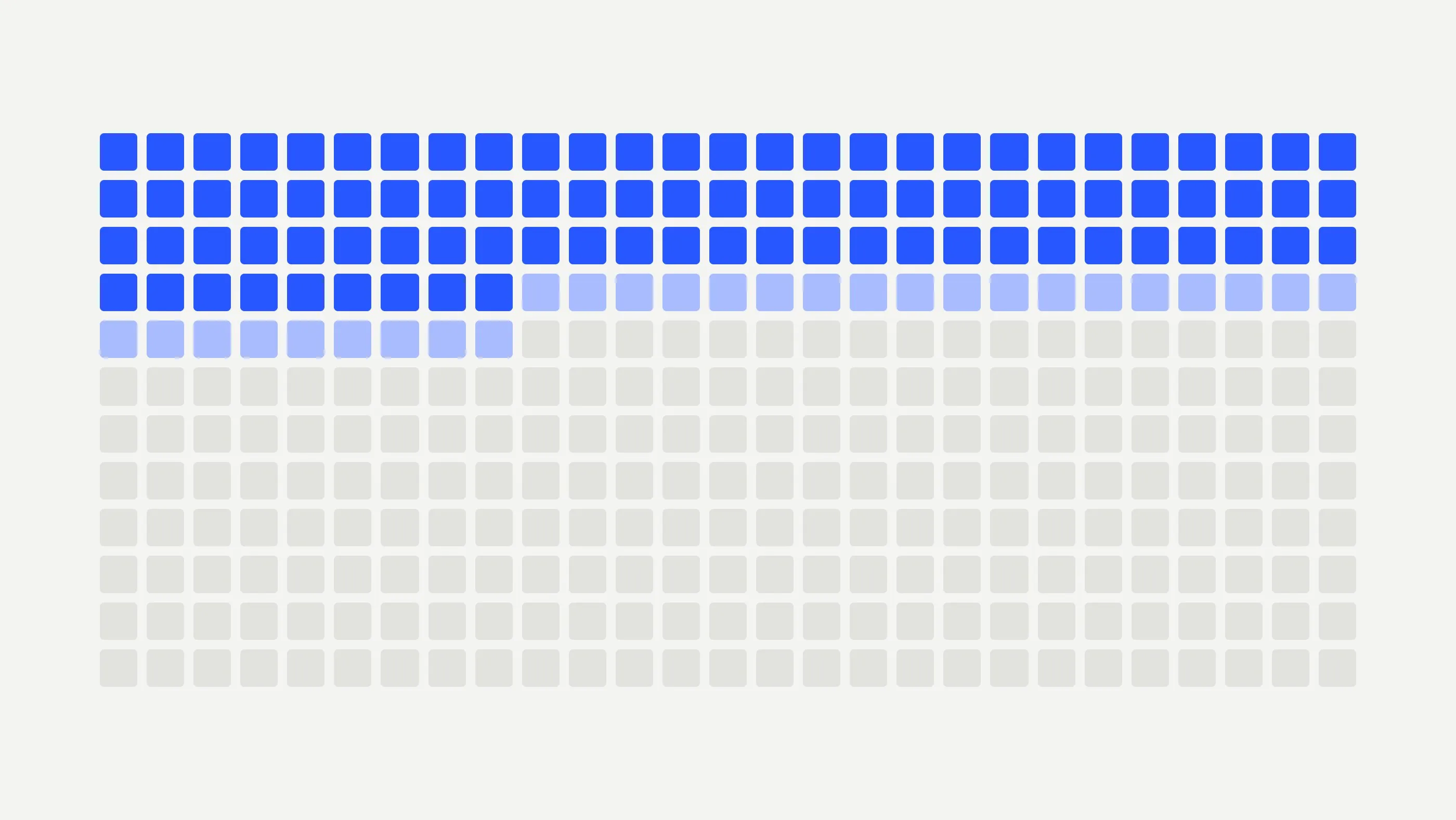
We checked 324 Arkansas small-business websites on one day. A third have no website of their own, a third have no tap-to-call number, and 3% pass Google's speed test.
When a customer looks up a local business, the website gets a few seconds to answer four questions. Are you open? Where are you? How much? How do I reach you? We wanted to know how often Arkansas small-business websites answer them. National surveys ask owners if they have a website. We didn’t ask. We opened each website and checked what a customer sees.
On October 19, 2026, we checked the websites of 324 independent businesses in six trades and six parts of the state: restaurants, salons and barber shops, home services, auto repair, health practices and local shops, in the Little Rock area, Northwest Arkansas, Conway, Jonesboro, Fort Smith and Hot Springs. The full numbers, the method, the data and the code are in our Arkansas Small-Business Website Report 2026. This post is the short version, with what each finding means for an owner.
How we picked the businesses
We ran 130 Google Maps searches, the way a customer would: “plumber in Conway, AR”, “hair salon in Rogers, AR” and so on. They found 5,046 businesses. We took out chains and franchises, which left 4,471 independent businesses. From each trade in each area we picked 9 at random, with a fixed seed so anyone can repeat the pick. That makes 324 businesses, 54 in each trade.
A computer check opened each home page with the same rules. Then we opened every website again in a normal browser on a phone, with JavaScript on, and took the answers from there. To test our own work, we read 30 websites picked at random, page by page. On those 30, 148 of our 150 answers matched what the page shows.
One honest note before the numbers. We build websites for small businesses, so we have an interest in this topic. That is why the method, the code and the data are public.
1. A third have no website of their own
Of the 324 businesses, 117 (36%) have no website of their own. On 90 Google listings there is no website at all. On 27 more, the website link goes to a Facebook page or a directory listing.
That matters because a Facebook page can’t answer the four questions well. Hours, prices and the menu get lost between posts, and some customers don’t use Facebook at all. A customer who can’t find the answer searches again, or calls someone else.

The trades differ a lot. Salons and barber shops (59%) and auto repair shops (56%) are the most likely to have no website of their own. Health practices are the least likely (11%): almost every chiropractor, dentist and physical therapy clinic we checked has a website.
For context, RapidWebLaunch checked 91,904 Google listings in 24 North American cities and found 17% with no website on the listing. In our sample, 28% of the Google listings have no website at all. The methods differ, so read this as context, not a ranking.
2. Only 3% pass Google’s phone speed test
Most people look up a local business on their phone, often from the car or the street. So we tested each home page with Google PageSpeed, the free tool Google gives to anyone. It loads the page the way a mid-range phone on slow mobile data does, and gives a score from 0 to 100. Google calls 90 or more “good”.
Of the 168 websites Google could test, 5 scored “good”. That is 3%. Most (68%) landed in the middle band, which Google calls “needs improvement”. The rest (29%) scored “poor”.

In the same test, the typical page took 9.1 seconds to show its main content. This is a lab test, not a real visit, and a phone on good Wi-Fi will often do better. But the test is the same for every site, and the pattern is clear: most of these pages carry far more weight than they need.
A common cause is simple. Photos go up straight from a phone or a camera, at several megabytes each, and a slider at the top loads five of them at once. Resize photos to the size they show on the page (under 300 KB each is a good aim), remove sliders and pop-ups you don’t need, and test again.
3. A third have no phone number you can tap
On a phone, a phone number should be a link. One tap starts the call. Of the 180 websites that opened, 63 (35%) have no phone number you can tap.
On 45 of those 63 websites, the number is right there on the page, as plain text. The customer has to copy it, or remember it and type it. Some will. Others go back to the search results, where the next business has a Call button. For a salon or a plumber, that call is the job.
4. Four in ten don’t show their hours
“Are you open now?” is the first question most customers have. Of the 180 websites, 71 (39%) don’t show their hours on the home page, in the text or in the page data that Google reads.

By trade, salons and barber shops miss both most often: 63% have no tap-to-call number and 58% show no hours, among the 19 salon websites that opened. That group is small, so the exact figure can be off by 20 points or more. The direction is still worth acting on: for a salon, the call and the opening hours are most of what a new client needs.
Home services show the opposite pattern. Most contractors get the call button right (only 16% miss it), but 41% leave out their hours. A customer with a leaking pipe wants to know if someone will pick up now, and the page is where they look first.
5. Only 4% have a Spanish version
Of the 180 websites, 8 have a Spanish version. That is 4%.
Spanish matters more in some parts of Arkansas than others. Across the state, 6.1% of people age 5 and older speak Spanish at home. In Springdale it is 31.8%, in Rogers 22.7% and in Fort Smith 15.6% (U.S. Census Bureau, American Community Survey 2020–2024). In those cities, a business with no Spanish page is quietly turning away a lot of customers.
A Spanish version doesn’t have to mean translating the whole site. One page with your services, your hours and how to reach you, linked from your menu, is a strong start. Have a native speaker read it before it goes live.
6. One Google link in 17 leads nowhere
Of the 204 Google listings that link to a website of their own, 12 (6%) send customers to a website that doesn’t work. We opened each of these twice, the second time in a normal browser. Either the address doesn’t exist, the security certificate is wrong, the server shows an error, or the page says “not found” or offers the domain for sale.
This one is the cheapest to fix. Once a month, open your Google Business Profile on your phone and tap your website link. If it fails, call whoever hosts your website, or change the link on Google.
The good news
Every one of the 180 websites that opened uses https, and every one has the setting that tells a phone to fit the page to its screen. The basics are in place.

The problems are in what the customer needs next: the call button, the hours and the speed. Most websites have a way to reach the business (86%) and an address (79%). Fewer have a phone number you can tap (65%) or the hours (61%). Almost none pass the speed test.
Two problems we expected turned out to be rare. Only 3 of the 38 restaurant websites put the menu in a PDF, and only 9% show a copyright year of 2024 or older. And the platform didn’t decide the result. We found strong and weak websites on WordPress, Wix, Shopify and Squarespace alike.
What to fix this week
None of these fixes needs a new website. Most take less than an hour, and most website builders have a setting for each one.
- Add your website to your Google Business Profile. It is the link most customers tap first. No website yet? A one-page site with your hours, your menu or prices and a call button is enough to start.
- Make your phone number a tap-to-call link. In your website builder, link the number to “tel:” plus the number, for example tel:5015550123. Most builders call this a phone link.
- Put your hours and address as text on the home page. Keep them the same as on your Google listing.
- Tap your website link on Google once a month. A broken link loses a customer who was ready to buy.
- Add a Spanish page if your customers speak Spanish. Services, hours and how to reach you are enough to start.
- Test your home page on your own phone, on mobile data. If you wait, your customers wait too. Then run it through PageSpeed Insights on the mobile tab.
The limits of this study
This is a sample of independent businesses that are on Google Maps, in six trades and six areas, on one day. It doesn’t cover every Arkansas business: most Arkansas small businesses have no employees, and many aren’t on Google Maps. We read the home page only, so hours on another page don’t count. For all 324 businesses, the margin of error is about 5 points. For one trade or one area, it is 13 to 22 points, so treat small differences between trades as noise.
The report has every check, by trade and by area, the definitions, the data as a CSV file and the code. Reporters can quote and chart the numbers with a link to it.
See how your own website does
Our free website check looks at the same call button, hours, address and phone speed on your own site. It takes about 30 seconds and changes nothing on your website. If something needs fixing, you’ll see what to do first.