Mastering case study design
How to plan and design a customer case study that buyers actually read: clear objectives, real evidence, a simple structure and one job per page.

A good case study is proof. It shows a real customer, a real problem and what changed after they worked with you, and its design decides whether busy buyers actually read it. Here’s how to plan and design one.
What is case study design?
In marketing, a case study tells the story of how a customer solved a problem with your product or service. Case study design is how that story is structured and laid out: the order of the sections, the headline result, the pull quote and the visuals that carry the key points. (The term also names a research method in academia; this post is about the marketing kind.)
Why case study design matters
A well-designed case study does more than document a project. It shows your expertise, gives prospects evidence they can share with their colleagues and builds trust with people who haven’t worked with you yet. Sales teams use case studies as proof in their sales presentations and follow-up emails, so a clear design keeps working long after it’s published.
Elements of an effective case study
- A clear objective: decide what the case study should prove, and to whom.
- Real evidence: results, numbers and quotes you can stand behind, gathered from the customer and your own records.
- A structured format: challenge, solution and result, in an order that’s easy to follow.
- A compelling narrative: a story that shows how the problem was solved, not just that it was.
Steps to create a successful case study
- Select the right case: choose a customer and project that match the buyers you want to reach.
- Gather the facts: interview the customer, collect the numbers and get approval for anything you publish.
- Find the story: identify the turning point and the result that matters most.
- Draft the case study: outline the problem, the solution and the results.
- Review and revise: edit for clarity, check every claim and get sign-off from the customer.
Best practices in case study design
- Be objective: present the facts plainly. Credibility comes from specifics, not adjectives.
- Lead with the result: put the headline outcome on the cover or the first screen.
- Use visuals: charts, diagrams and photos make the story easier to follow.
- Keep it concise: detailed enough to convince, short enough to finish.
Give each page one job
When we designed Think ABM’s customer case study about its AWS Innovate campaign, the story had a lot of moving parts and only four A4 pages to hold them. So each page got one job. The cover carries the headline result over an illustration. The second page covers the challenge and why the client chose Think ABM. The third draws the three-email campaign as a step diagram. The last pairs the outcome with a full-height pull quote.
The same approach works for most B2B case studies, in print or as a PDF.
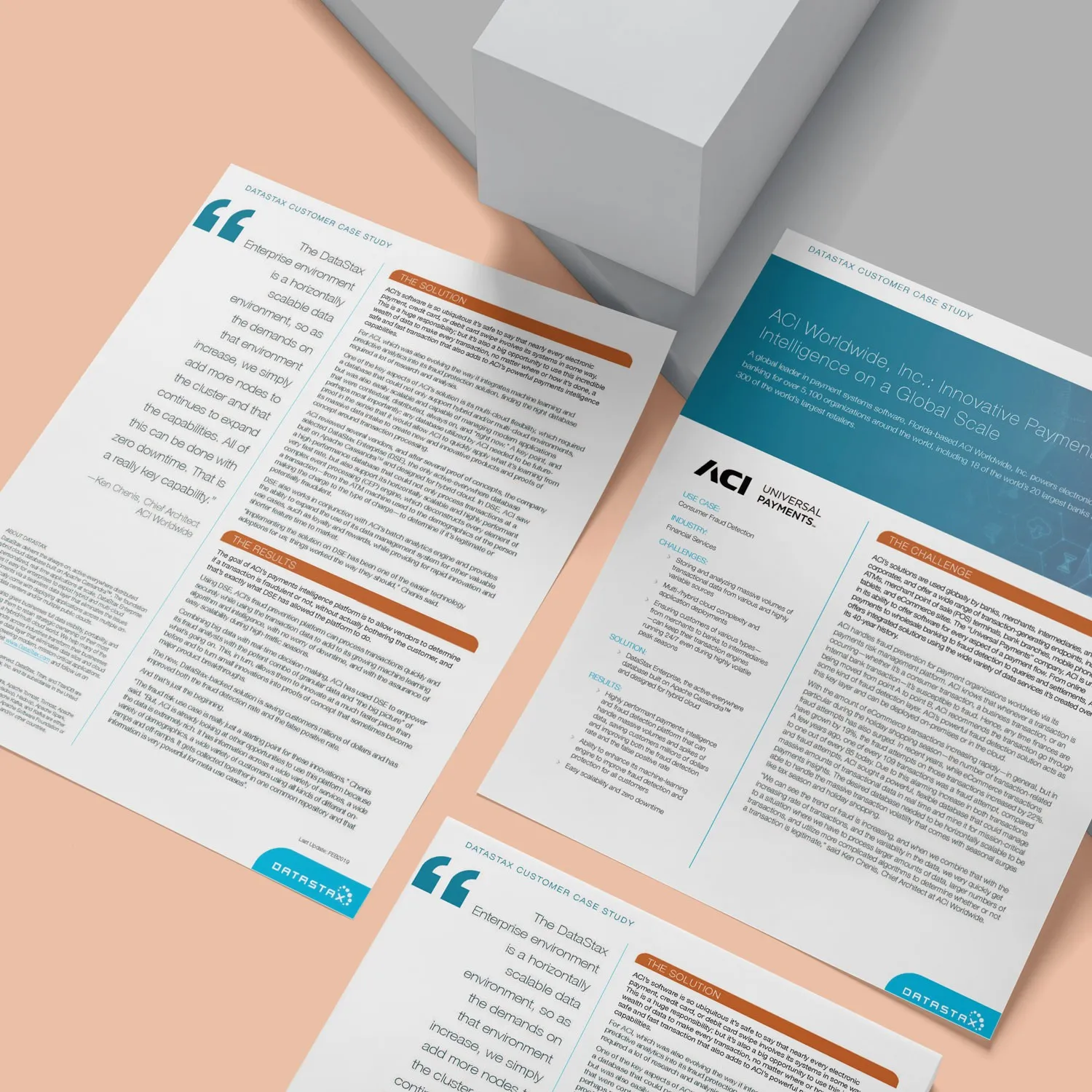
Good case study design turns good work into proof buyers can use: lead with the result and give every page a clear purpose. Case studies are part of our marketing collateral work, so if you have a customer story waiting to be told, tell us about it.